Sunday, June 26, 2011

Gladys City Boomtown Museum

After visiting the Texas Energy Museum in Beaumont, we drove over the Gladys City Boomtown Museum.  Located near Lamar University, the Gladys City Boomtown Museum is a little treasure chest full of artifacts from the early 1900's, when oil was discovered under a hill called Spindletop.  The replica buildings that make up Gladys City Boomtown were built using photos taken during that time period as a reference.  Except for air conditioning in a few of the buildings (thank goodness!), each building takes you back in time, giving a glimpse of what life was like in Gladys City.  Gladys City got its name from Patillo Higgins, naming it after a young girl in his Sunday School class.  The town never lived up to what Higgins had hoped it would become, an industrial city much like those he had visited in Pennsylvania.
Oil Derrick

Spindletop Monument


Museum Entrance


Before starting the tour of Gladys City, it is recommended that you watch a 6-minute video that give you a little history about the town.  We watched the video and then began our self-tour.  The buildings are set up like a small town with a boardwalk leading from one building to another. In the center of the "town" is a large oil derrick, sitting on a platform.  Each building has a plaque attached near its entrance, giving information about the building.  Artifacts from the early 1900's, most of which have been donated, fill each building.  My daughter was amazed with all the "weird stuff" we came across.  And, my mother enjoyed sharing stories about items that brought back memories of her childhood.  Exhibits included a saloon, a barber shop, a dry goods store, an oil exchange, a photo studio, a general store, a drug store with a soda shop and doctor's office, and a stable. 


The building that amused us all the most was the Barber's Shop.  Not only could you get a haircut, you could also have your teeth pulled or get your hair singed.  Peyton really liked the drug store because of the soda shop, but found it strange that there was a doctor's office in the same building.  Jarrod liked all the old cameras in the photo studio.  He said he saw a Kodak 1, which would have been the first Kodak camera.  My mom enjoyed all the gadgets in the general store, and I liked the home above the general store the best.

After our self-tour through all of the exhibits, we spent some time chatting with Mark Osborne, the new director of the Gladys City Boomtown Museum.  He explained that the museum is on Lamar University's campus and shared more information about Spindletop and Gladys City with us.  I shared pictures of my grandfather at Spindletop with him.  He told me that I was the second grad student from SHSU to stop by that day.  He had offered the other student a free Gladys City Coloring Book, so he said I could have one too.  Yea!  I've had a hard time finding any picture books that have to do with Spindletop, so I plan to count the coloring book as my picture book!  The drawings in the book are by Steve Cooper.  The first page gives a brief story of Spindletop and Gladys City Boomtown, and every page that follows contains pictures with short descriptions. 

There is no technology used with the exhibits, but I think technology would throw off the feel of being back in time.  The video shown before the tour is shown on a flat-screen television with a DVD.  When we were leaving, Jarrod spotted a bar code like we saw at the Houston Children's Museum posted in the gift shop.  The barcode leads you to the museum's Facebook page.


The Gladys City Boomtown Museum in Beaumont is a must see for all of those interested in Texas history.  The museum offers a glimpse of life in a bustling Texas oil boom town during the early 1900's.  Fun and educational!

Texas Energy Museum

Jarrod, Peyton and my mom were my travel buddies for my latest excursion.  I wanted to hit some museums in Beaumont, which is about a 2-hour trip from Spring.  The Texas Energy Museum was our first stop in Beaumont.  The museum shares information about petroleum science and the geology involved with it.  It also shares the history of oil discovery, production and refinery.

The Texas Energy Museum is a located in Beaumont's downtown museum district.  As we entered the museum, we were greeted by a friendly lady who was working at the front desk, Ms. Vicki.  I sparked a conversation with her about Spindletop, expressing my interests in learning more about it.  She told me that I would see a lot about Spindletop on the second floor of the museum.  I told her that we also planned to go to the Gladys City Boomtown Museum, and she said it was a really neat place.  She also suggested that I check out the Tyrrell Historical Library which was located right next to the Texas Energy Museum.  She explained that they held a lot of documents pertaining to Spindletop and the city of Beaumont.  I asked if she knew how to get to the Gladys City Boomtown Museum because we had planned to go there next.  She had some maps and told me she would mark a route for us while we walked around the museum.  Ms. Vicki then explained to us where to start on our tour and we set off to learn more.

Checking viscosity of different oils

Beginning of the Tour


Steering a tanker down
the Neches River
  
"Texas Christmas Tree"
(on its side)
Example of an oil bit

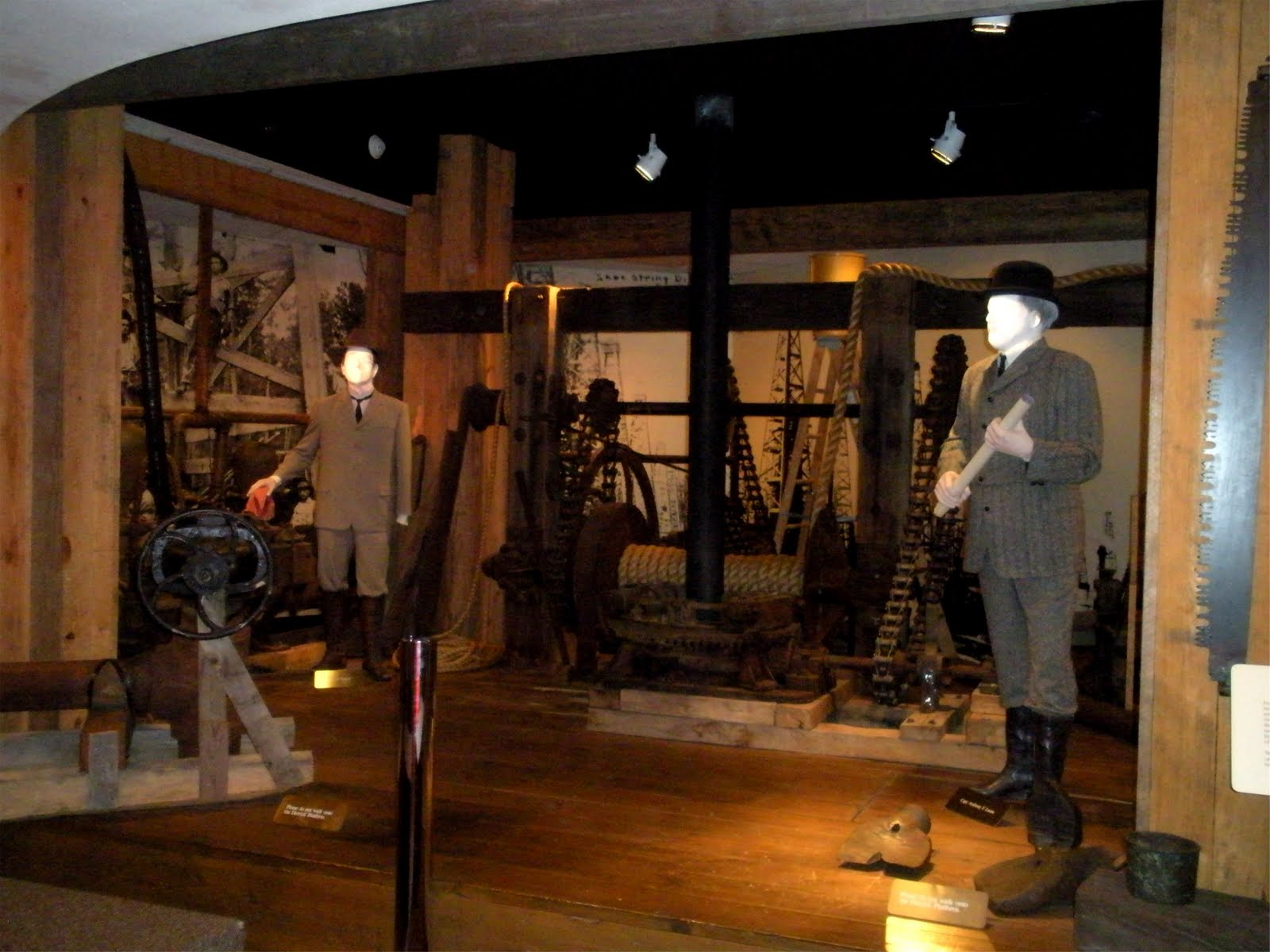
The first floor of the museum shares information about the formation and exploration of oil.  The mechanics of oil drilling is explored and refining methods are also shared.  The second floor shares more history about Spindletop.  Displays with life-size mannequins, are used for sharing the story of early oil drilling.  At first, I couldn't figure out why all the mannequins had bright-white faces until we found one that worked.  A face is projected onto the mannequin which gives it a very life-like appearance.  My mom was fascinated with how real it looked.  We sat and listened to Mr. Patillo Higgins share his story about his role in the discovery of oil at Spindletop.


Patillo Higgins - you can just
barely see his face


The Texas Energy Museum is great place to learn about the petroleum industry.  They offer a virtual tour of the museum on their website, along with activities for grades K-5 that have been correlated to the TEKS.  Admission is only $2 for adults, $1 for children and $1 for seniors.  If you're ever in the Beaumont area, make sure you put this on your list of things to do.  If Ms. Vicki is there, tell her I said, "Howdy!"

Wildcatters in recent news...

I've been reading a lot about Spindletop and Texas wildcatters recently, thinking they were of the past.  Yet, I've opened the Houston Chronicle on two occasions in the past month and found articles written about some wildcatters, who may not be out hunting for oil anymore, but they have definitely left their mark and are continuing to do so.  Just thought I would share those articles here.

On June 8th, I read an article about Lester Smith, a wildcatter who has been donating millions of dollars to Houston area health institutions.  A two-time cancer survivor, his latest donation of 15 million dollars to the hospital district is the largest donation they have ever received.  He wanted to do something with his money that would help cancer patients at Ben Taub Hospital.  His donation will go towards a new cancer clinic that will cut wait times and add new equipment.  He is so devout in his battle against cancer, that he has even painted one of his wells pink.  (Houston Chronicle Article)

Clayton Williams is another wildcatter featured in the Chronicle.  I read an article about him in the June 14th paper.  The front-page picture of Williams standing in his office, grinning from ear to ear, with animal hides and mounted kills all around him fits my ideal of a Texas Wildcatter.  At 79 years old, Williams is far from slowing down, owning and operating Clayton Williams Energy.  (Houston Chronicle Article)

Headed to Beaumont

I have always wanted to go to Spindletop because my grandfather was there! 

 My grandfather on my dad's side, Shelby Banks Goodman, was born in Corscicana, Texas in 1880.  When he married my grandmother, Mary Alice Strother, he was 60 and she was only 30.  My father, Shelby Lee Goodman, was born when my grandfather was 62, and my dad was the oldest of five children.  My grandfather died when my dad was 13, leaving him to help raise his four younger siblings.  What little we know about my grandfather comes from the few family stories we have heard over the years, his obituary, and a few pictures that one of my aunts was able to locate and restore. 

My grandfather seems to have lead a very interesting life.  His obituary says that he worked on the second oil well to be drilled at Spindletop.  I have two pictures with him standing in front of an oil well.  He would have been 21 years old at the time.  He is second from the right in both pictures.


I have always wanted to know more about Spindletop because I feel like the more I know about Spindletop, the more I'll learn about my grandfather's life.  It's so hard to imagine what life was like in Texas in the early 1900's, but I'm hoping the museums I visit will give me a better feeling for what it was like back then. 

Here is a picture of a house in Corsicana, that my grandfather lived in.  I'm not sure if he lived here as a child or as an adult.  There's a lady on the front porch with two children.  I've often wondered if that may be my great-grandmother with my grandfather and a great aunt.  The family picture is of my grandfather with his first wife, who is not my grandmother, and his first daughter, my half-aunt. 


Grandfather's
Obituary
(back)
Grandfather's
Obituary
(front)


Dad, Grandmother, Uncle

I have been reading the book, The Big Rich: The Rise and Fall of the Greatest Texas Oil Fortunes by Bryan Burroughs.  I have really enjoyed reading this book.  I love reading books that mention places that I am familiar with or have visited.  The book gives you a glimpse into the lives of some of Texas' richest oilmen.  It's been a fun read, and I recommend it to anyone who enjoys a little Texas history!

From my visit to Beaumont, I hope to learn more about Texas oil, Spindletop, and what life was like when my grandfather was a young man in Texas.


Saturday, June 25, 2011

Quick Stop...The Children's Museum of the Brazos Valley

On our way to visit the Clara B. Mounce Public Library in Bryan, we discovered a little children's museum right across the street from it.  In an historic building that used to be Bryan's Police Station and Jailhouse, is located The Children's Museum of the Brazos Valley.  Since we had other plans, we didn't get to stay long, much to Peyton's disappointment.  The nice young ladies working the front desk allowed us to take a look around and take some pictures.


The museum kind of reminded me of a much scaled-down version of Houston's Children's Museum.  Exhibits included a spaceship center, an HEB grocery store, a music corner and a reading area.  The children present seemed to really be enjoying themselves.  As we made our way upstairs, we passed a few boys making paper airplanes, testing them out down the stairwell.  A couple of girls were playing a rather large game of checkers, while others were reading.


I did not notice much use of any technology in the museum.  One flat-screen television hung on the wall near the entrance, broadcasting information to patrons.  Other than that, I don't remember seeing anything else.

This was a cute little museum, that seems to still be in development.  There is plenty of educational activities to entertain young children for a couple of hours. 

The cost of admission is $5 per person, and seniors can get in for $4.  I feel like this price is kind of high, considering it only cost $8 for The Children's Museum of Houston, and that place was HUGE!!  I would think that $3 for adults and $2 per child would be more appropriate.  But, I guess they're trying to raise money for the museum, so it's going to a good cause!

Carnegie History Center

The Carnegie History Center is located in downtown Bryan.  The library has a fascinating history, and it's worth the visit just to experience the beautifully restored building.  Opened to the public in 1903, the library was the result of a grant offered by Scottish immigrant Andrew Carnegie.  Carnegie libraries can be found all over the world.  Bryan's Carnegie Library is the oldest existing Carnegie in Texas.


Stepping through the doors at the Carnegie History Center feels like you're stepping back in time.  Two hand-carved pine stairways flank the entryway.  The tongue and groove pine flooring, the decorative pressed metal ceiling and stairwells are all original to the building.  The library has two oak pub tables, a library table, an oak magazine rack, and several ladder-back chairs that are also original to the library.


After introducing myself to the librarian, my mother and I began looking around the first floor.  The first floor houses a lot of information and photographs about the history of Bryan-College Station and the Brazos Valley area.  In fact, I discovered some old high school yearbooks and found my mom's junior and senior pictures in SFA High School's Yearbooks (SFA is now a middle school in Bryan).  She doesn't own these books, so it was the first time I've ever seen her senior picture.  Turns out we looked a lot alike!  

My Mom's Senior Pic

My 10th Grade Picture


The second floor of the History Center stores many specialized genealogy resources.  Computers with internet access and microfilm readers are also available for use.  What better place to look up family history than in a library that holds so much history itself.


Thursday, June 23, 2011

Clara B. Mounce Public Library

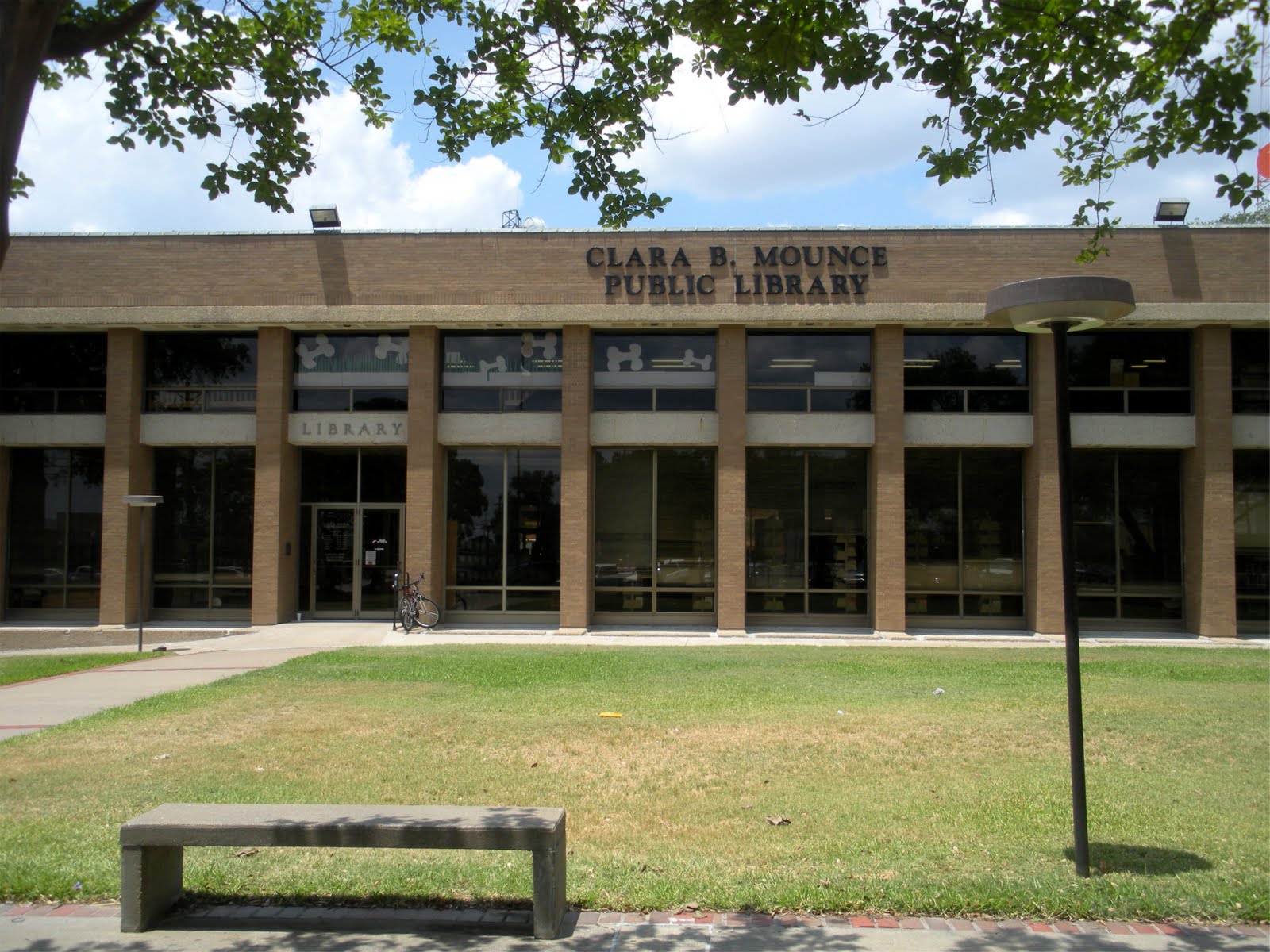
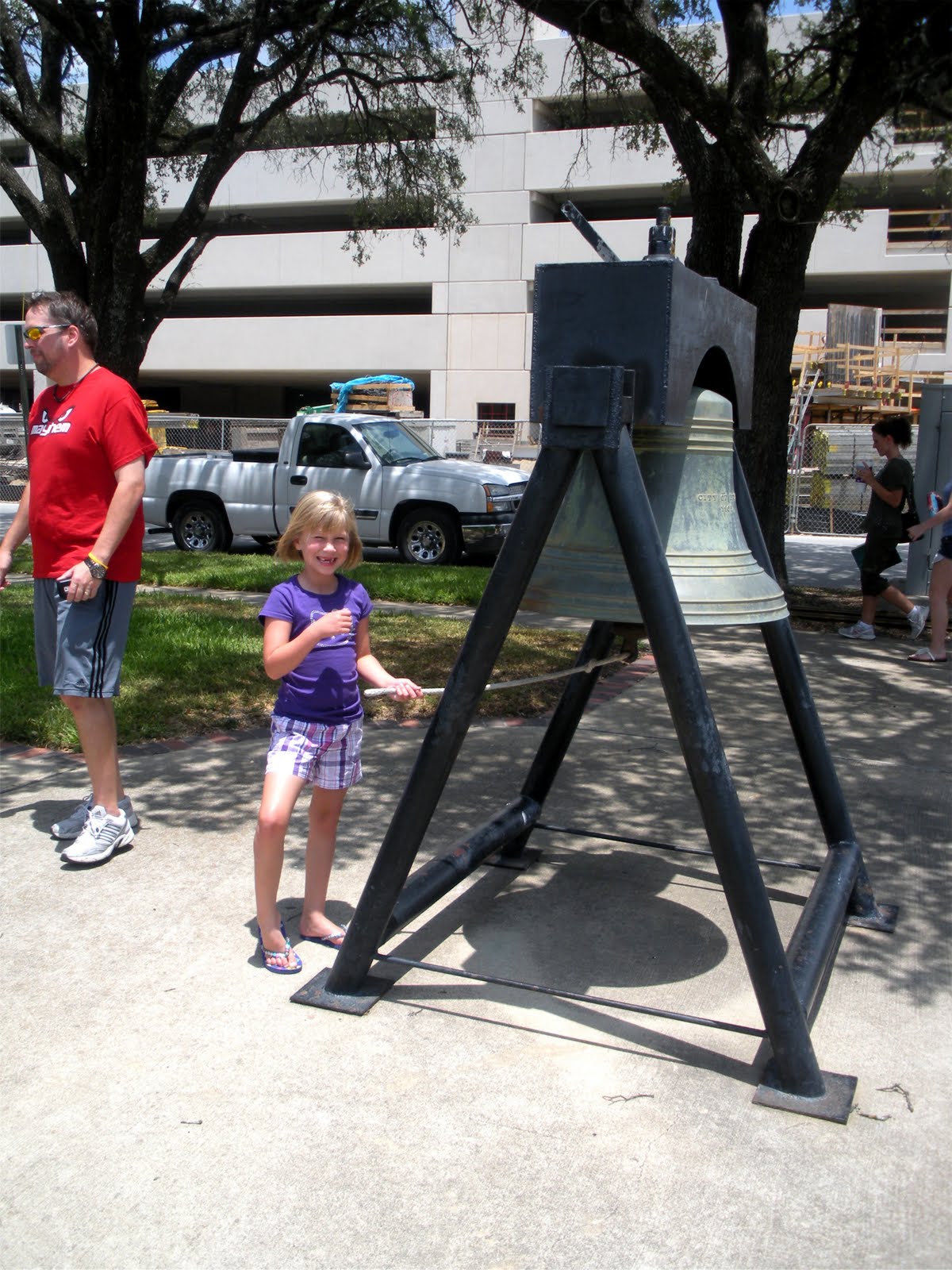
Jarrod and Peyton joined me on my trip to Bryan's public library yesterday.  My mom and my nephew, Brawley, came along as well.  From the outside, it looks like there hasn't been much change to the library since the days when I went there as a kid.  The big bell that was so much fun to ring still sits out in front of the rectangular, two-story building.  Oh, but it does bear a new name now; it's now called the Clara B. Mounce Public Library.


Upon entering the library, everything felt so familiar.  The biggest change I noticed to the first floor is the addition of computers.  The circulation desk looks a little more modern than what I remember it looking like.  I spotted on self-checkout machine located on the circulation desk.


After a looking over the first floor, Brawley quickly led us up the stairs to the children's area.  I am so happy to see him excited about visiting the library.  We found an open computer and I showed him how to look up books using the online catalog.  After locating a couple of books, I showed him where to find graphic novels since I remembered him telling me that he liked to read them.  He ended up taking home about four graphic novels, one "I Spy" book and a chapter book to read.


While I was helping Brawley, Jarrod did a little exploring and found a small area with computers set up for Internet use.  Next to the computer area was a small area set aside for teens.  I don't know if this spot has always been here, but I have a feeling it is somewhat new.  The space is a little hard to find, and not quite as elaborate as the teen room we visited at the Houston Public Library.  Mismatched furniture and the room's location made me feel like they were just kind of throwing teens in the corner, as far away from everyone else as possible.  I appreciate the attempt to set aside a spot for young adults and their literature, but the room just felt a bit odd to me.  I also noticed something that I have not seen in any library that I've recently visited.  On one of the walls in the teen room was a sign that said "Quiet Zone!"  Really?  There was one near the computer area as well.  I understand wanting it to be quiet near the computers for those doing research, but I don't think the teen area needs a "Quiet Zone!" sign.  In fact, I've come to expect a little bit of noise when I visit libraries.  I think patrons feel a little more at ease about asking for help when they are not expected to be "quiet."  Anyway, I just think the sign may turn some teens away or make them feel uncomfortable.


I enjoyed my visit to the Clara B. Mounce Public Library in Bryan.  It was great reminiscing and seeing what kind of changes had been made to prepare the library for 21st century information services.  Some changes in the teen area would make the library much more inviting to young adults.